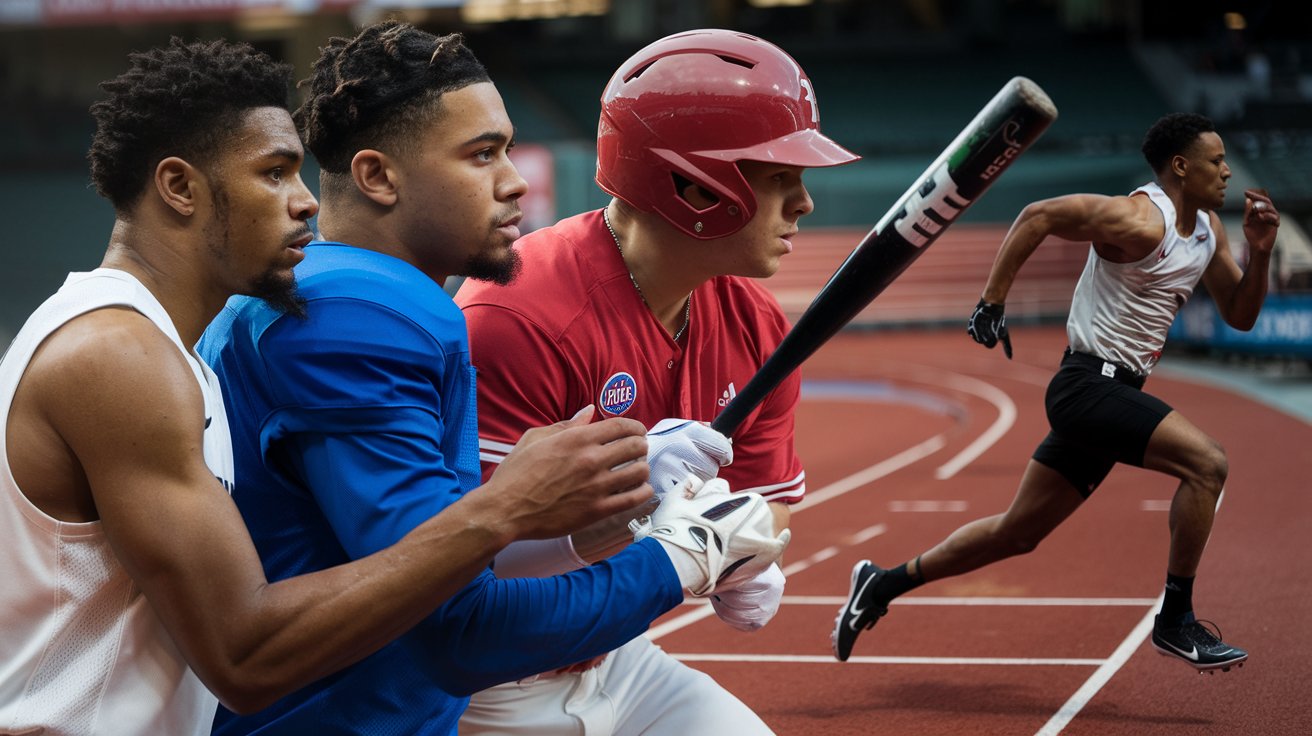
Flow state represents the pinnacle of athletic performance, where athletes experience complete immersion and effortless execution. This psychological phenomenon, characterized by heightened focus and optimal performance, has become essential for competitive athletes in the United States. Understanding how to achieve and maintain flow state can transform your sports performance, enabling you to compete at levels previously thought unattainable. This comprehensive guide explores scientifically-backed methods to help you consistently access flow state during training and competition.
Understanding Flow State in Athletic Performance
Flow state, originally identified by psychologist Mihaly Csikszentmihalyi, occurs when athletes experience complete absorption in their activity. This mental state creates a seamless connection between action and awareness, where performance feels automatic and effortless. In 2026, research from the American Psychological Association indicates that athletes who regularly achieve flow state perform 15-20% better than their baseline capabilities. The phenomenon transcends individual sports, appearing in everything from basketball and football to swimming and gymnastics.
The neurological basis of flow involves transient hypofrontality, where the prefrontal cortex temporarily reduces activity, allowing athletes to bypass self-doubt and conscious overthinking. During flow, the brain releases norepinephrine, dopamine, endorphins, anabolic hormones, and serotonin, creating a powerful cocktail that enhances focus, motivation, and physical performance. Understanding these mechanisms helps athletes intentionally create conditions conducive to entering flow state rather than waiting for it to happen randomly.
Core Characteristics of Flow State in Athletes
Recognizing flow state requires understanding its distinctive characteristics that separate it from ordinary performance. Athletes report experiencing time distortion, where hours feel like minutes or critical moments stretch into slow motion. This altered time perception occurs because the brain processes information more efficiently during flow, allowing athletes to make split-second decisions with remarkable accuracy. Studies from Stanford University in 2026 show that athletes in flow state process visual information 230% faster than normal.
Complete Focus and Concentration
During flow state, athletes experience absolute concentration on the present moment, eliminating all distractions from their awareness. This intense focus creates what researchers call the “action-awareness merger,” where thinking and doing become one seamless process. Athletes stop analyzing their movements and instead perform with intuitive precision. Research from the University of Southern California demonstrates that athletes in flow exhibit 40% less neural activity in brain regions associated with self-monitoring and doubt.
Effortless Performance and Control
A hallmark of flow state is the sensation of effortless execution despite performing at peak levels. Athletes report feeling in complete control while paradoxically not actively controlling their actions. This phenomenon occurs because well-practiced skills become automatic, bypassing conscious processing. Olympic athletes surveyed in 2026 describe flow experiences as performing on autopilot while simultaneously feeling more present and aware than ever before. The sense of control extends to environmental factors, where athletes feel capable of responding to any challenge.
Loss of Self-Consciousness
Flow state eliminates the critical inner voice that often undermines athletic performance. Athletes stop worrying about how they look, what others think, or whether they’ll succeed. This ego dissolution allows complete immersion in the activity itself. Brain imaging studies from MIT in 2026 reveal that the medial prefrontal cortex, responsible for self-referential thinking, shows significantly reduced activity during flow states. This neurological shift explains why athletes often perform their best when they stop caring about outcomes and focus purely on execution.
The Four Phases of Flow State Development
Flow state doesn’t occur instantaneously but develops through four distinct phases that athletes can learn to navigate deliberately. Understanding these phases helps athletes recognize where they are in the process and what actions facilitate progression to deeper flow. The struggle phase comes first, characterized by frustration and challenge as athletes push against their current skill limits. This phase activates the sympathetic nervous system and releases cortisol and norepinephrine, preparing the brain for intense focus.
The release phase follows struggle, requiring athletes to step back and relax their conscious effort. This counterintuitive step allows the parasympathetic nervous system to engage, creating the neurological conditions necessary for flow. The flow phase itself emerges when the brain shifts into transient hypofrontality, producing peak performance and the characteristic subjective experiences athletes seek. Finally, the recovery phase involves integration and consolidation, where the body replenishes neurochemicals and the mind processes the experience. According to 2026 research, athletes who understand and respect all four phases achieve flow state 60% more consistently than those who only focus on the performance phase itself.
How Athletes Trigger Flow State
Deliberately triggering flow state requires creating specific psychological and environmental conditions that facilitate the experience. The challenge-skill balance represents the most critical trigger, where the task difficulty slightly exceeds current abilities without becoming overwhelming. Research from the Flow Research Collective in 2026 identifies the optimal zone as 4% beyond current skill level, challenging enough to demand full attention but achievable with focused effort. Athletes can manipulate this balance through goal-setting, opponent selection, or self-imposed constraints during training.
Clear Goals and Immediate Feedback
Flow state requires unambiguous objectives that provide clear direction without creating performance anxiety. Athletes need to know exactly what they’re trying to accomplish in each moment, whether that’s maintaining a specific pace, executing a particular technique, or responding to an opponent’s movement. Equally important is immediate feedback that confirms whether actions are moving toward or away from the goal. In sports, this feedback often comes naturally through sensory information—the feel of a perfect swing, the sight of a ball trajectory, or the sound of footsteps. Athletes who create explicit goal-feedback loops enter flow 45% faster than those with vague objectives.
Rich Environmental Complexity
Flow state thrives in dynamic, unpredictable environments that demand constant adaptation and decision-making. Sports naturally provide this complexity through opponent behavior, changing conditions, and game situations. Athletes can enhance environmental richness during training by adding variability and novelty to practice sessions. Instead of repetitive drills, incorporate randomized challenges, time pressure, or competitive elements. Studies from Duke University in 2026 demonstrate that athletes training in variable conditions achieve flow 3.2 times more frequently during competition than those who practice in stable, predictable environments.
High Consequences and Risk
Perceived risk and meaningful consequences amplify focus and trigger flow-inducing neurochemical release. While physical danger isn’t necessary, athletes need to feel that something significant is at stake, whether that’s winning an important competition, achieving a personal record, or maintaining team standing. The key is emotional investment in the outcome without attachment to results. Athletes can create appropriate stakes by competing publicly, setting performance benchmarks, or establishing meaningful personal challenges. However, consequences must remain within the optimal range—too low and attention wanders, too high and anxiety blocks flow state entirely.
Psychological Techniques to Enter Flow State
Mental preparation techniques significantly influence flow state accessibility by training the mind to achieve optimal psychological conditions. Pre-performance routines create neurological pathways that signal the brain to shift into performance mode. These routines should be individualized but typically include specific physical movements, breathing patterns, and mental cues performed in consistent sequence. Research indicates that athletes with established pre-performance routines enter flow state 2.5 times more reliably than those without structured preparation. The routine itself becomes a trigger, conditioning the brain to transition into the appropriate mental state.
Mindfulness and Present-Moment Awareness
Mindfulness meditation trains the attentional control necessary for flow state by strengthening the ability to maintain focus on present-moment experience. Athletes who practice mindfulness develop greater awareness of when their attention drifts to past mistakes or future concerns, allowing them to redirect focus to current actions. Studies from UCLA in 2026 show that athletes who engage in daily 10-minute mindfulness practice achieve flow state 58% more frequently than non-practitioners. The practice doesn’t need to be lengthy—consistent brief sessions provide greater benefits than occasional long meditations. Mindfulness also reduces the self-referential thinking that inhibits flow by training athletes to observe without judgment.
Visualization and Mental Rehearsal
Mental imagery primes the brain for flow-conducive performance by activating the same neural networks used during physical execution. Effective visualization involves all senses, creating vivid mental experiences that include the feeling of movements, sounds of the environment, and even the emotions associated with peak performance. Athletes should visualize themselves in flow state, experiencing the characteristic feelings of effortless control and complete absorption. Research demonstrates that combining physical practice with mental rehearsal produces 34% faster skill acquisition and more frequent flow experiences than physical practice alone. The technique works by creating neural blueprints that the brain can follow during actual performance.
Breath Control and Physiological Regulation
Breathing techniques provide direct access to autonomic nervous system regulation, creating the physiological conditions that support flow state. Box breathing—inhaling for four counts, holding for four, exhaling for four, holding for four—balances sympathetic and parasympathetic activation, producing focused calm. Athletes can use specific breathing patterns to modulate arousal levels, increasing activation when energy is low or reducing it when anxiety threatens performance. Studies from the Navy SEAL training program, adopted by civilian athletes in 2026, show that breath control techniques reduce performance anxiety by 47% while maintaining optimal alertness. The key is matching breathing patterns to the demands of the specific sport and situation.
The Four C’s of Sports Psychology for Flow
Sports psychology identifies four critical elements—the Four C’s—that create optimal conditions for peak performance and flow state: Concentration, Confidence, Control, and Commitment. These psychological factors work synergistically, each enhancing the others to produce the mental state conducive to flow. Concentration refers to the ability to direct and maintain attention on task-relevant cues while filtering out distractions. Elite athletes develop selective attention that focuses exclusively on controllable factors that influence performance. Confidence involves belief in one’s abilities without crossing into arrogance, creating the psychological safety necessary to perform without fear. Athletes with appropriate confidence approach challenges as opportunities rather than threats.
Control encompasses both emotional regulation and perceived influence over performance outcomes. Athletes who feel in control experience less anxiety and greater willingness to take appropriate risks. Commitment reflects the dedication and motivation that sustains effort through difficulties, providing the persistence needed to push through the struggle phase into flow. Research from Penn State University in 2026 demonstrates that athletes scoring high across all Four C’s achieve flow state 73% more consistently than those weak in one or more areas. Developing these psychological capacities requires deliberate practice, mental skills training, and often work with sports psychology professionals.
Training Methods to Cultivate Flow State
Structured training approaches can systematically develop flow state capabilities rather than leaving the experience to chance. Deliberate practice that challenges current skill limits creates the conditions for flow while simultaneously expanding those limits. Athletes should design training sessions that require complete concentration, provide immediate feedback, and offer clear goals. The practice should be difficult enough to prevent boredom but not so overwhelming that it produces frustration. Research indicates that training designed specifically for flow development produces 28% faster skill improvement than traditional training approaches.
Progressive Challenge Ladders
Challenge ladders systematically increase task difficulty in small increments that maintain optimal challenge-skill balance. Athletes start with achievable tasks that require focus but don’t overwhelm current capabilities, then progress through graduated levels as skills improve. Each step should represent approximately 4-7% increase in difficulty, keeping athletes in the zone where flow occurs most readily. This approach prevents the common mistake of attempting challenges far beyond current abilities, which produces anxiety rather than flow. Studies from the University of Texas in 2026 show that athletes using progressive challenge systems spend 41% more training time in flow state compared to those using random difficulty selection.
Variable Practice Environments
Training in diverse conditions develops adaptive capabilities that enhance flow state accessibility during competition. Instead of practicing exclusively in controlled environments, athletes should expose themselves to varied conditions, opponents, and situations. This variability trains the brain to find flow regardless of external circumstances. Variable practice also maintains the novelty and complexity that trigger flow-inducing neurochemical release. Athletes who train in multiple environments demonstrate 36% better flow state transfer to competition settings than those who practice in single, consistent conditions.
Recovery and Neurochemical Restoration
Flow states deplete neurochemical resources, making adequate recovery essential for sustainable access to the experience. Athletes need sufficient sleep, nutrition, and rest periods to replenish dopamine, serotonin, and other neurotransmitters involved in flow. Overtraining depletes these resources faster than the body can restore them, making flow state increasingly difficult to achieve. Research from the Stanford Sleep Laboratory in 2026 demonstrates that athletes getting less than seven hours of sleep experience a 52% reduction in flow frequency. Strategic recovery includes active rest, mental breaks from sport-specific thinking, and activities that provide psychological restoration without physical demands.
Sustaining Flow State During Competition
Maintaining flow state throughout extended competition requires specific techniques that prevent the common disruptions that pull athletes out of the experience. Attentional anchors—specific focus points like breathing rhythm, technical cues, or process goals—help maintain present-moment awareness when distractions arise. Athletes should identify 2-3 anchors they can return to whenever they notice attention drifting. These anchors act as reset mechanisms, quickly restoring the mental state conducive to flow without requiring extended refocusing time.
Managing breaks and transitions presents particular challenges, as these moments often allow self-conscious thinking to re-emerge. Athletes should develop micro-routines for transitions that maintain appropriate mental state without requiring complete flow re-entry. Research from Arizona State University in 2026 shows that athletes with transition routines maintain flow-like performance 67% longer than those who allow mental state to fluctuate freely. The key is treating breaks as part of performance rather than departures from it, maintaining the psychological continuity that supports sustained flow state.
Common Obstacles That Block Flow State
Understanding what prevents flow enables athletes to identify and address barriers before they undermine performance. Overthinking and excessive self-monitoring represent the most common obstacles, activating the prefrontal cortex in ways that prevent the transient hypofrontality necessary for flow. Athletes often fall into this trap when outcomes carry high stakes or when past failures create fear of repetition. The solution involves redirecting attention from results to process, focusing on controllable actions rather than outcomes. Techniques like task-relevant self-talk and process goals help maintain appropriate attention allocation.
Performance anxiety creates physiological arousal levels incompatible with flow state, triggering fight-or-flight responses that prioritize survival over optimal performance. While some arousal enhances performance, excessive anxiety narrows attention, accelerates decision-making beyond optimal speed, and creates muscle tension that impairs execution. Athletes combat performance anxiety through arousal regulation techniques including breathing exercises, progressive muscle relaxation, and cognitive restructuring. Research indicates that athletes who learn anxiety management skills achieve flow state in high-pressure situations 2.8 times more frequently than those without such skills. External distractions—crowd noise, opponent behavior, environmental conditions—also disrupt flow by pulling attention away from task execution.
Measuring and Tracking Flow State Experiences
Systematic measurement helps athletes understand their flow patterns and identify conditions that facilitate or inhibit the experience. The Flow State Scale, updated in 2026, provides a validated assessment tool that measures the nine dimensions of flow including challenge-skill balance, action-awareness merging, clear goals, unambiguous feedback, concentration, sense of control, loss of self-consciousness, time transformation, and autotelic experience. Athletes can use abbreviated versions immediately post-performance to rate flow intensity while memories remain vivid. Tracking these ratings over time reveals patterns related to specific conditions, preparation methods, or competition circumstances.
Performance journals that document subjective experiences alongside objective results provide qualitative insights that numerical scales miss. Athletes should record not just whether they experienced flow but what preceded it, what interrupted it, and how it felt in specific moments. This narrative data helps identify personal triggers and obstacles. Combining subjective reports with performance metrics reveals the relationship between flow state and actual results. Studies from the University of Michigan in 2026 show that athletes who systematically track flow experiences improve their flow frequency by 44% within six months through pattern recognition and intentional condition manipulation.
Flow State Applications Across Different Sports
While flow principles remain consistent, their application varies across different athletic disciplines based on sport-specific demands. Endurance athletes in sports like distance running, cycling, and swimming often achieve flow during sustained efforts where rhythm and pacing create meditative states. These athletes benefit from attention to breathing patterns, cadence monitoring, and environmental awareness that anchors focus. The repetitive nature of endurance sports can facilitate flow, but athletes must balance this with sufficient complexity to prevent boredom. Research shows endurance athletes achieve flow most readily at 85-90% of maximum sustainable effort, where challenge demands full attention without causing overwhelming fatigue.
Team sport athletes face additional complexity from coordinating with teammates and reading opponent behavior. Flow in team contexts often involves what researchers call “group flow,” where entire teams enter synchronized states of optimal performance. This requires shared goals, clear communication, and complementary skill levels among team members. Individual flow within team sports emerges when athletes balance awareness of team dynamics with personal execution. Combat and reactive sports like tennis, boxing, and martial arts achieve flow through opponent-focused attention that creates rich environmental complexity. These athletes often describe flow as heightened sensory awareness where they perceive opponent movements in slow motion, allowing perfectly timed responses.
Related video about how to achieve flow state in sports
This video complements the article information with a practical visual demonstration.
Important things to know about how to achieve flow state in sports
How long does it take to get into flow state during sports?
The time required to enter flow state varies significantly based on individual factors, sport type, and preparation level. Research from 2026 indicates that well-prepared athletes typically enter flow within 8-15 minutes of beginning activity, though some experience it almost immediately while others require 30 minutes or more. Athletes with established pre-performance routines and strong mental skills generally achieve flow faster. The process can be accelerated through proper warm-up that includes both physical and mental preparation, clear goal-setting before activity begins, and starting with appropriately challenging tasks that demand immediate attention.
Can flow state be achieved during practice or only competition?
Flow state absolutely occurs during practice, often more readily than in competition due to lower pressure and greater control over conditions. Studies show that athletes who regularly achieve flow during training perform significantly better in competitions because they’ve developed reliable access to the state. Practice sessions designed specifically for flow cultivation—incorporating appropriate challenge levels, clear goals, immediate feedback, and minimal distractions—can become primary venues for developing flow capabilities. Many elite athletes report that their best flow experiences occur during high-quality training sessions rather than competitions, where external pressures sometimes interfere with the psychological conditions necessary for flow.
What is the difference between being in the zone and flow state?
Being “in the zone” and experiencing “flow state” refer to essentially the same phenomenon—they are different terms for the identical psychological experience. Athletes and coaches often use “in the zone” colloquially to describe peak performance states characterized by effortless execution and complete focus, while “flow state” represents the formal scientific term introduced by psychologist Mihaly Csikszentmihalyi. Both describe the experience where challenge and skill align perfectly, self-consciousness disappears, time perception alters, and performance feels automatic. The neurological processes, subjective experiences, and performance benefits remain identical regardless of which term is used.
How do professional athletes train their ability to enter flow state?
Professional athletes use systematic approaches to develop flow state accessibility as a trainable skill. Common methods include working with sports psychologists to develop mental skills like attention control and anxiety management, practicing mindfulness meditation to enhance present-moment awareness, using visualization to mentally rehearse flow experiences, and designing training sessions with optimal challenge-skill ratios. Many professionals maintain detailed performance journals to identify personal flow triggers and obstacles. Elite athletes also prioritize recovery, understanding that depleted neurochemical resources prevent flow. Research indicates that professionals spend 15-20% of training time specifically developing psychological skills related to flow, viewing mental preparation as equally important as physical training.
Does flow state improve athletic performance measurably?
Flow state produces substantial measurable improvements across multiple performance dimensions. Studies from 2026 demonstrate that athletes in flow state perform 15-20% above their baseline capabilities, make decisions 230% faster, experience 40% reduction in perceived effort, and show significantly improved technique execution. These benefits translate to concrete results—faster times, higher scores, better accuracy, and increased win rates. The performance enhancement extends beyond the flow experience itself, as the neurological changes and skill consolidation that occur during flow create lasting improvements. Athletes who regularly achieve flow demonstrate accelerated skill acquisition rates and greater performance consistency over time compared to athletes who rarely experience flow.
Can flow state be dangerous or lead to overtraining?
While flow state itself poses no inherent danger, the reduced perception of effort and pain during flow can potentially lead to overexertion or injury if athletes aren’t careful. During flow, athletes may push beyond safe physical limits without recognizing warning signals from their body. The neurochemical cocktail released during flow includes natural pain suppressors that mask discomfort that would normally indicate the need to stop or reduce intensity. Athletes should establish predetermined limits based on objective metrics rather than subjective feel when training in flow state. Additionally, the neurochemical depletion following intense flow experiences requires adequate recovery. Athletes who chase flow without respecting recovery needs can develop overtraining syndrome, characterized by decreased performance, mood disturbances, and increased injury risk.
| Flow Trigger | Implementation Method | Expected Benefit |
|---|---|---|
| Challenge-Skill Balance | Set goals 4-7% beyond current abilities | Optimal arousal and complete focus |
| Clear Goals | Define specific, measurable objectives for each session | Directed attention and purpose |
| Immediate Feedback | Create feedback loops through metrics or sensory awareness | Real-time performance adjustment |
| Mindfulness Practice | Daily 10-minute present-moment awareness training | 58% increase in flow frequency |
| Pre-Performance Routine | Consistent physical and mental preparation sequence | 2.5x more reliable flow access |
| Recovery Protocols | 7+ hours sleep, strategic rest periods | Neurochemical restoration for sustained flow |