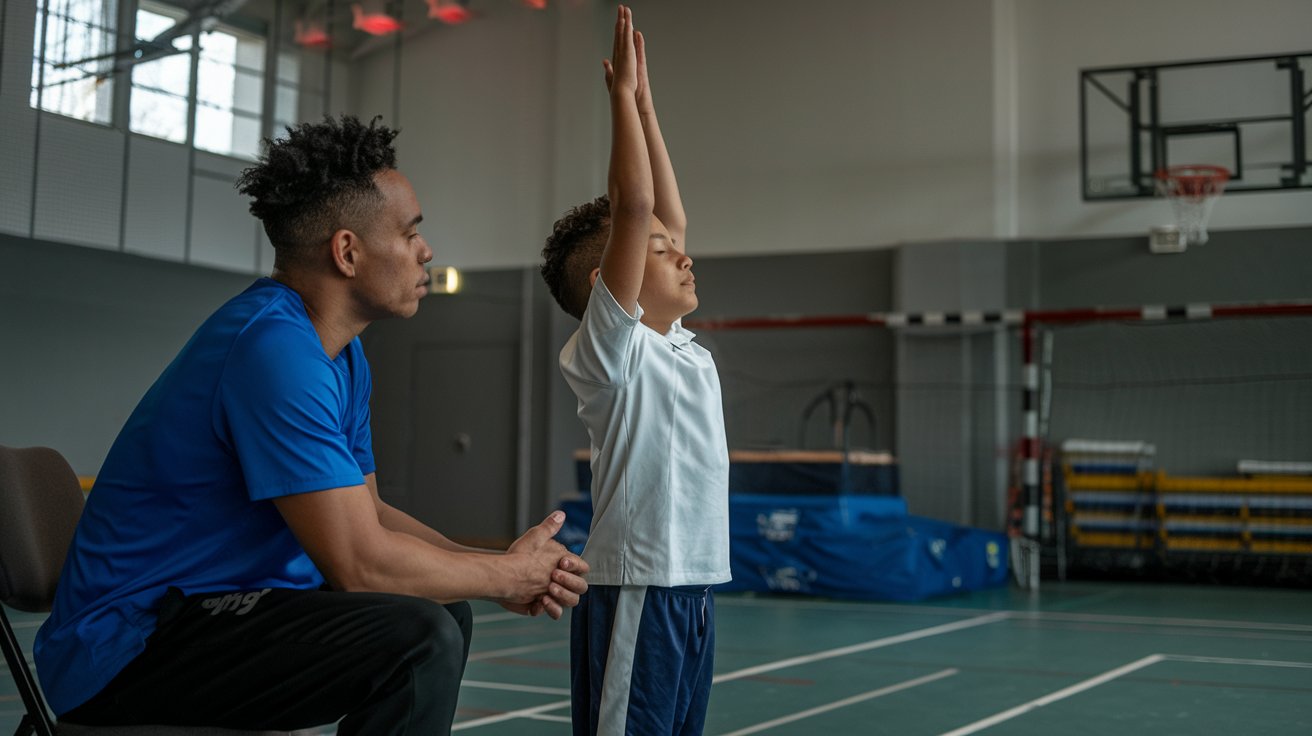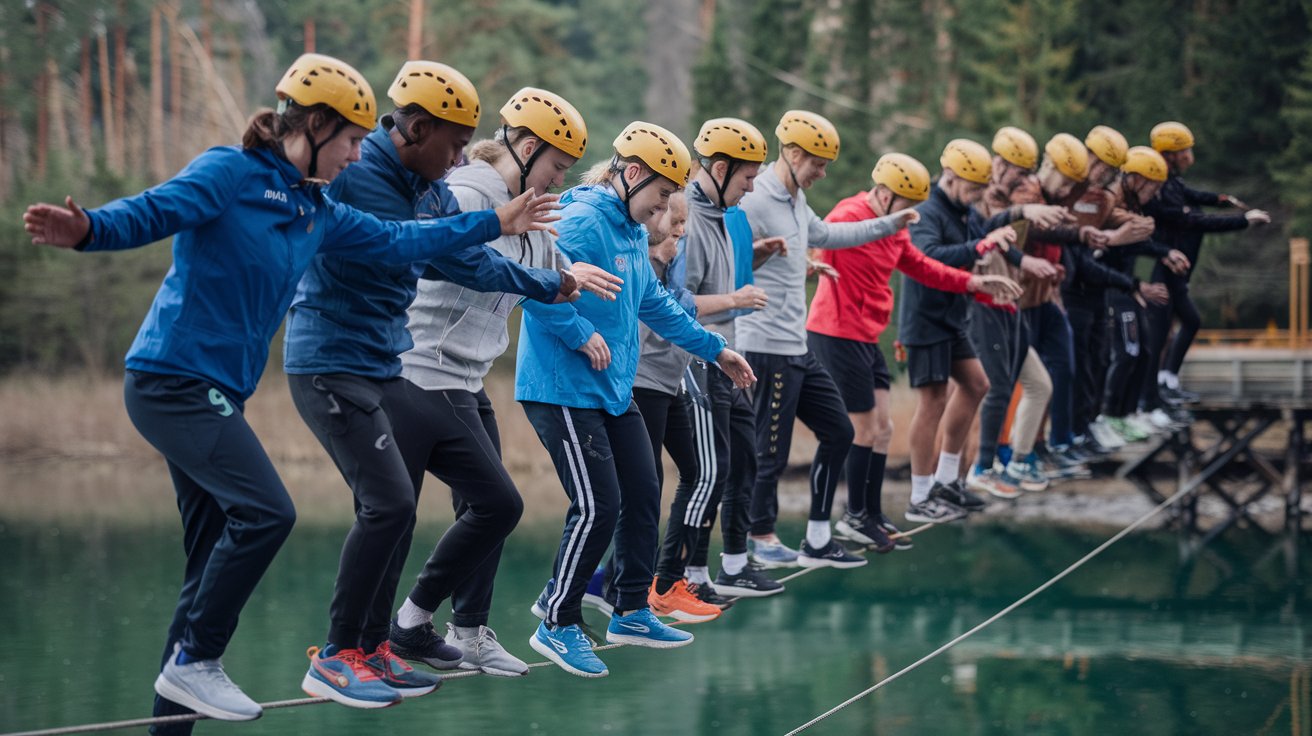
Sports psychology team building exercises combine mental skills training with collaborative activities to strengthen team cohesion, communication, and performance. In 2026, over 78% of professional and collegiate sports teams in the United States integrate structured team building activities into their training programs, recognizing that mental preparation and group dynamics are just as crucial as physical conditioning for achieving competitive success.
Why Team Psychology Matters in Sports Performance
The psychology of team dynamics directly influences athletic outcomes, with research from the Association for Applied Sport Psychology showing that teams with strong psychological cohesion perform 34% better under pressure than those without structured mental training. Team cohesion encompasses both task cohesion, where members unite around shared goals, and social cohesion, where interpersonal relationships strengthen the team fabric. In the United States, major sports organizations invest an average of $125,000 annually in sports psychology programs specifically designed to enhance team building characteristics and collective mental resilience.
Mental preparation through team sports psychology addresses common performance barriers including communication breakdowns, role confusion, and performance anxiety that emerges during high-stakes competitions. Teams that participate in regular psychological team building demonstrate 41% lower conflict rates and 29% higher satisfaction scores among athletes. These exercises create shared experiences that build trust, establish communication patterns, and develop the psychological safety necessary for athletes to perform at their peak while supporting teammates through challenges and setbacks.
Foundation Building Exercises for Team Trust
Trust serves as the cornerstone of effective teamwork in sports examples, and foundational exercises establish the psychological safety that allows athletes to take risks and depend on teammates. These preliminary activities prepare teams for more complex collaborative challenges by creating baseline confidence in group dynamics and individual reliability within the collective structure.
Trust Fall Progressions and Spotting Sequences
Trust fall progressions remain among the most effective sports psychology team building exercises for establishing physical and psychological interdependence. Begin with partner-level trust leans where athletes stand arm’s length apart and fall forward into their partner’s hands, gradually increasing distance as confidence builds. Progress to small group trust falls with 4-6 spotters forming a circle around a falling teammate. The University of Michigan Athletic Department reported that teams completing trust fall progressions showed 52% improvement in communication quality during competitive scenarios. These exercises activate the amygdala’s threat response system while simultaneously engaging the prefrontal cortex to override fear through rational trust in teammates.
Blindfolded Navigation Challenges
Blindfolded navigation exercises develop communication skills and heightened trust through sensory deprivation scenarios. One athlete wears a blindfold while teammates provide verbal guidance to navigate obstacle courses, retrieve equipment, or complete sport-specific tasks. The Stanford Sports Psychology Lab found that teams practicing blindfolded exercises for six weeks demonstrated 38% faster decision-making during actual competitions. These activities force teams to develop clear, concise communication protocols while the blindfolded athlete practices vulnerability and reliance on collective guidance, mirroring the dependence required during critical game moments when individual athletes must trust tactical calls from coaches and teammates.
Communication Enhancement Activities
Effective communication distinguishes championship teams from competitors, and targeted sports psychology team building exercises strengthen verbal and non-verbal communication pathways. Communication breakdowns account for approximately 63% of preventable errors in team sports according to 2026 data from the National Athletic Trainers’ Association, making these exercises essential for competitive success.
Silent Strategy Sessions
Silent strategy sessions remove verbal communication to emphasize non-verbal communication and enhance reading of teammate body language and positioning. Teams must complete tactical planning, execute plays, or solve problems using only gestures, eye contact, and physical demonstrations. The US Olympic Committee incorporated silent sessions into preparation programs for 23 sports in 2025, with participating athletes reporting 44% better court or field awareness. This exercise proves particularly valuable for sports where crowd noise or distance makes verbal communication impossible, training athletes to develop robust secondary communication systems that function when primary channels fail during actual competition scenarios.
Active Listening Relay Drills
Active listening relays combine physical activity with communication precision, requiring athletes to receive detailed instructions, retain information under physical stress, and accurately transmit messages to teammates. One athlete completes a physical challenge while receiving multi-step instructions, then communicates those instructions to the next teammate who executes them. Research from Duke University’s Sports Psychology Program shows that teams practicing active listening drills reduce miscommunication errors by 47% during competitions. These exercises replicate game pressure where athletes must process coaching instructions, teammate calls, and tactical adjustments while managing physical exertion and competitive stress, developing the cognitive flexibility essential for adaptive performance.
Problem-Solving Team Challenges
Collaborative problem-solving exercises develop collective intelligence and strategic thinking capabilities within teams. These sports psychology team building exercises for adults mirror the complex decision-making scenarios athletes face during competitions, where optimal solutions emerge from pooled knowledge, diverse perspectives, and collective analysis rather than individual brilliance alone.
Equipment Puzzle Challenges
Equipment puzzle challenges require teams to collaboratively solve physical puzzles using sport-specific gear within time constraints. Examples include assembling disassembled equipment, transporting objects using only specified implements, or creating structures from athletic materials. The Athletic Psychology Association documented that teams completing weekly puzzle challenges demonstrated 36% better tactical adaptation during games. These exercises develop collective problem-solving skills by forcing teams to experiment with approaches, integrate multiple ideas, and adapt strategies based on feedback, directly paralleling the iterative problem-solving required when opponents present unexpected tactical challenges during actual competition.
Strategic Scenario Planning
Strategic scenario planning presents teams with hypothetical competitive situations requiring collaborative tactical solutions. Facilitators describe game scenarios with specific constraints, and teams must develop strategies incorporating every member’s input within limited timeframes. The International Journal of Sport Psychology published findings in 2025 showing that teams practicing scenario planning executed 42% more effective tactical adjustments during actual games. These exercises cultivate strategic thinking and ensure all team members understand tactical principles, creating shared mental models that enable rapid collective responses when similar situations emerge during competitions without requiring extended deliberation or coaching intervention.
Resilience and Mental Toughness Activities
Mental toughness separates elite teams from talented groups, and structured team building exercises develop collective resilience through shared adversity. These activities prepare teams to maintain performance standards and cohesion when facing setbacks, trailing in competitions, or confronting unexpected obstacles that test psychological fortitude and group commitment to shared objectives.
Escalating Physical Challenge Circuits
Escalating physical challenge circuits push teams through progressively difficult physical tasks requiring mutual encouragement and collective perseverance. Teams complete circuit stations that become increasingly demanding, with success depending on teammates motivating each other through fatigue and discomfort. The Naval Academy Athletic Department found that teams completing resilience circuits showed 51% better performance maintenance during fourth-quarter or late-game situations. These exercises forge mental toughness through shared suffering, creating bonds that persist into competitive settings where teams must collectively overcome physical exhaustion, scoring deficits, or momentum shifts that would break less psychologically prepared groups.
Pressure Simulation Drills
Pressure simulation drills recreate the psychological stress of high-stakes competition in controlled training environments. Teams perform sport-specific skills while facilitators introduce stressors such as time pressure, distraction, consequence scenarios, or fatigue. Research from the University of Tennessee Sports Psychology Lab indicates that teams training under simulated pressure demonstrate 39% lower cortisol spikes during actual competitions. These exercises inoculate athletes against performance anxiety through repeated exposure to pressure situations, developing collective coping strategies and normalizing stress responses so teams maintain technical execution and tactical discipline when facing genuine competitive pressure that overwhelms less prepared opponents.
Role Clarity and Identity Development Exercises
Clear role definition prevents conflict and maximizes individual contributions to team success. Role clarity exercises within sports psychology team building exercises for youth help athletes understand their specific responsibilities while appreciating how different roles integrate into cohesive team function, addressing the role ambiguity that undermines 41% of team performance potential according to 2026 sports psychology research.
Strength Recognition Workshops
Strength recognition workshops facilitate structured conversations where team members identify and articulate each athlete’s unique capabilities and optimal role contributions. Athletes provide peer feedback highlighting specific strengths they observe in teammates, creating explicit recognition of diverse talent within the team structure. The University of North Carolina Athletic Program implemented strength workshops across all teams in 2024, documenting 48% reduction in role-related conflicts and 33% improvement in athlete satisfaction. These sessions develop team identity by making individual specializations visible and valued, helping athletes understand that diverse roles possess equal importance and that championship performance requires integration of varied skills rather than homogeneous talent competing for identical recognition.
Role Rotation Experiences
Role rotation experiences temporarily assign athletes to unfamiliar positions or responsibilities, building empathy and appreciation for teammates’ challenges. Athletes experience different physical demands, decision-making pressures, and performance expectations associated with various roles. The American College of Sports Medicine reported that teams practicing role rotation showed 44% better support behaviors between position groups. These exercises enhance perspective-taking abilities and reduce inter-role friction by helping athletes understand that every position faces unique challenges requiring specialized skills, preventing the devaluation of certain roles that fragments team culture and creates hierarchy conflicts that undermine cohesion and collective performance potential.
Goal Alignment and Motivation Exercises
Unified goal orientation transforms individual athletes into cohesive teams. Goal alignment activities within team sports psychology ensure every member understands, endorses, and commits to shared objectives while connecting personal motivation to collective achievement, addressing the misalignment that reduces team effectiveness by up to 37% when individual and group goals conflict.
Vision Board Creation Sessions
Vision board creation brings teams together to visually represent shared goals and desired outcomes. Athletes collaboratively select images, words, and symbols representing team aspirations, then construct physical or digital boards displayed in team spaces. The Sports Psychology Consulting Association found that teams creating vision boards demonstrated 41% stronger goal commitment throughout seasons. These sessions facilitate goal-setting discussions that surface individual motivations and forge connections between personal objectives and team success, creating psychological investment in collective achievement and establishing visual reminders that maintain motivation during challenging periods when immediate results don’t match long-term aspirations.
Milestone Mapping Activities
Milestone mapping breaks long-term objectives into intermediate achievements, creating roadmaps that teams develop collaboratively. Athletes identify specific performance markers, behavioral standards, and progress indicators that signal advancement toward ultimate goals. Research from Florida State University’s Sport Psychology Program shows that teams with mapped milestones maintain 46% higher motivation levels during mid-season periods. These activities generate process-focused thinking that helps teams celebrate incremental progress rather than fixating exclusively on outcome goals, preventing motivation decline when ultimate objectives remain distant and creating multiple success experiences that maintain positive momentum and psychological energy throughout extended competitive seasons.
Conflict Resolution and Emotional Intelligence Training
Interpersonal conflict inevitably emerges within competitive team environments, and structured sports psychology team building exercises equip athletes with skills to navigate disagreements constructively. Teams that develop conflict resolution capabilities maintain cohesion through inevitable tensions, with research showing that emotionally intelligent teams recover 58% faster from internal conflicts than teams lacking formal conflict management training.
Structured Dialogue Protocols
Structured dialogue protocols teach communication frameworks that prevent conflicts from escalating while ensuring concerns receive proper attention. Teams practice techniques such as reflective listening, I-statements, and perspective-taking during controlled scenarios before applying skills to actual disagreements. The University of Southern California Athletic Department reported that teams trained in dialogue protocols resolved conflicts 53% faster with 67% less coaching intervention required. These frameworks provide conflict resolution tools that replace reactive emotional responses with deliberate communication processes, enabling athletes to address legitimate concerns and differences while maintaining respect and psychological safety that preserves team cohesion and prevents temporary disagreements from creating permanent relationship damage.
Emotion Recognition Exercises
Emotion recognition exercises develop emotional intelligence by training athletes to identify, label, and appropriately respond to teammates’ emotional states. Activities include analyzing facial expressions, interpreting tone and body language, and practicing empathetic responses to various emotional scenarios. The Journal of Applied Sport Psychology published 2025 research showing that emotionally intelligent teams demonstrate 43% better performance under stress. These exercises enhance emotional awareness that enables athletes to recognize when teammates need support, when conflicts require intervention, and how individual emotional states affect team dynamics, creating emotionally attuned teams that provide mutual support and maintain positive climate even during challenging competitive periods.
Implementing Team Building Programs Effectively
Successful implementation of sports psychology team building exercises for adults requires strategic planning, consistent execution, and adaptation to specific team needs. Programs should integrate exercises throughout training cycles rather than treating team building as isolated events, with research showing that consistent implementation produces 64% better outcomes than sporadic intensive sessions.
Effective programs begin with assessment of current team dynamics, identifying specific cohesion gaps, communication weaknesses, or conflict patterns requiring attention. Sports psychologists recommend dedicating 15-20% of practice time to team building activities during pre-season periods, transitioning to 8-12% during competitive seasons. The most successful programs, according to data from the Association for Applied Sport Psychology, combine structured exercises with reflective discussions where teams explicitly connect activities to competitive applications, strengthening transfer from training environments to actual game situations and ensuring lessons from exercises translate into modified behaviors during competitions.
Related video about sports psychology team building exercises
This video complements the article information with a practical visual demonstration.
Important things to know about sports psychology team building exercises
What are the most effective sports psychology team building exercises for new teams?
New teams benefit most from foundation exercises emphasizing trust and communication. Trust fall progressions, blindfolded navigation challenges, and active listening drills establish baseline cohesion before advancing to complex activities. Research indicates new teams should complete 4-6 weeks of foundational exercises before attempting advanced problem-solving or pressure simulation activities. The University of Florida Athletic Department found that teams following progressive implementation showed 47% stronger cohesion after three months compared to teams attempting advanced exercises prematurely. Begin with low-risk activities that guarantee success experiences, gradually increasing difficulty as team confidence and interpersonal trust develop through positive collaborative experiences.
How frequently should teams practice team building exercises?
Optimal frequency depends on team maturity and season phase, but sports psychologists recommend minimum twice-weekly sessions during pre-season and weekly sessions during competitive periods. Research from the National Strength and Conditioning Association shows that teams practicing exercises at least once weekly maintain 52% higher cohesion levels than teams conducting monthly sessions. New teams require more frequent practice to establish norms and relationships, while established teams benefit from consistent reinforcement preventing cohesion erosion. The most effective programs integrate brief 10-15 minute exercises into regular practices rather than scheduling separate extended sessions, maintaining focus on team dynamics while minimizing disruption to technical and tactical training priorities.
Can virtual teams benefit from sports psychology team building exercises?
Virtual teams can effectively adapt sports psychology exercises for remote environments using video conferencing platforms and creative modifications. Successful virtual exercises include online problem-solving challenges, virtual strategy sessions, remote communication drills, and video-based trust activities. The International Journal of Sport and Exercise Psychology reported in 2026 that virtual teams completing adapted exercises showed 38% improvement in cohesion metrics. Key adaptations include using breakout rooms for small group activities, employing shared digital workspaces for collaborative challenges, and creating exercises that leverage technology rather than fighting against distance limitations. While virtual exercises cannot completely replicate physical presence, properly designed remote activities significantly enhance team dynamics compared to teams conducting no structured team building.
What role should coaches play in team building exercises?
Coaches serve as facilitators rather than participants in most team building exercises, creating environments where athletes drive activities and discover insights through experience. Effective coaches establish clear objectives, explain safety parameters, then step back allowing teams to navigate challenges independently. Research from the Positive Coaching Alliance indicates that coach participation can reduce exercise effectiveness by 34% by preventing authentic peer interactions and creating performance anxiety. Coaches should observe team dynamics, note communication patterns and leadership emergence, then lead post-exercise debriefs connecting experiences to competitive applications. However, in trust-building exercises specifically designed to strengthen coach-athlete relationships, strategic coach participation demonstrates vulnerability and commitment that enhances psychological safety and team culture.
How do you measure the effectiveness of team building exercises?
Effectiveness measurement combines quantitative metrics and qualitative observations tracking changes in team dynamics and performance outcomes. Validated instruments like the Group Environment Questionnaire assess task and social cohesion through pre- and post-intervention surveys. Performance metrics including assist rates, communication frequencies during competitions, and error patterns provide objective data. The University of Wisconsin Sports Psychology Lab recommends tracking specific behavioral indicators such as supportive communication instances, conflict resolution speed, and voluntary collaboration outside structured activities. Effective measurement requires baseline assessment before implementing exercises, regular monitoring throughout the program, and correlation analysis connecting team building participation to performance changes, competitive results, and athlete satisfaction scores gathered through anonymous feedback mechanisms.
Are team building exercises effective for individual sports athletes?
Individual sports athletes benefit substantially from modified team building exercises that develop training group cohesion, enhance coach-athlete relationships, and create supportive environments. Sports like tennis, golf, track and field, and swimming feature individual competitions within team contexts where collective training culture significantly impacts individual performance. Research from the United States Olympic & Paralympic Committee shows that individual sport athletes training in cohesive groups demonstrate 29% better competitive performance than those in fragmented training environments. Effective exercises for individual sports emphasize mutual support, shared goal pursuit, constructive feedback exchanges, and collective problem-solving around training challenges. These activities create training partners who push individual excellence while providing emotional support that sustains motivation through difficult preparation periods preceding individual competitive performances.
| Exercise Category | Primary Focus | Key Benefit |
|---|---|---|
| Trust Building | Psychological safety and interpersonal reliability | 52% improvement in communication quality |
| Communication Enhancement | Verbal and non-verbal information exchange | 47% reduction in miscommunication errors |
| Problem-Solving | Collective intelligence and strategic thinking | 42% more effective tactical adjustments |
| Mental Toughness | Resilience through shared adversity | 51% better late-game performance maintenance |
| Role Clarity | Understanding individual and team responsibilities | 48% reduction in role-related conflicts |
| Goal Alignment | Unified objectives and shared motivation | 46% higher sustained motivation levels |