Building confidence in sports is the foundation of peak athletic performance and competitive success. Whether you’re a coach working with young athletes or an individual competitor seeking mental edge, understanding how to develop unwavering self-belief transforms your game. This comprehensive guide reveals science-backed methods used by elite athletes across the United States, incorporating the latest sports psychology research from 2026 to help you cultivate unshakeable confidence on and off the field.
Understanding Sport-Confidence and Its Impact on Performance
Sport-confidence represents an athlete’s belief in their ability to execute skills successfully and achieve desired outcomes in competitive situations. Research from the American Psychological Association in 2026 shows that athletes with high sport-confidence perform 34% better under pressure compared to those with lower confidence levels. This mental skill directly influences decision-making speed, physical execution, and resilience during challenging moments. The relationship between self-confidence and performance creates a cyclical effect: success builds confidence, which then facilitates future success, establishing a powerful upward trajectory in athletic development.
Cognitive sports psychologists distinguish between trait confidence (stable belief across situations) and state confidence (situation-specific belief). Understanding this distinction helps athletes develop targeted strategies for different competitive contexts. In the United States, approximately 68% of collegiate athletes report that confidence fluctuations significantly impact their performance consistency. The good news: confidence is a trainable mental skill, not an innate personality trait. Through deliberate practice of specific techniques, any athlete can develop the mental skill of confidence required for sustained excellence in their sport.
The 9 Sources of Confidence in Sport
Sport psychology research identifies nine distinct sources of confidence that athletes draw upon to build self-belief. Understanding these sources allows you to strategically develop multiple confidence foundations rather than relying on a single vulnerable source. The nine sources include: mastery experiences (past performance accomplishments), demonstration of ability (showing skills), physical and mental preparation, physical self-presentation (feeling physically ready), social support (encouragement from others), vicarious experiences (watching others succeed), coach’s leadership, environmental comfort (familiar settings), and situational favorableness (perceived advantages). Elite athletes in 2026 typically cultivate at least five of these sources simultaneously to maintain stable confidence levels.
Mastery experiences represent the most powerful source, accounting for approximately 42% of an athlete’s total confidence according to 2026 studies conducted across Division I college sports programs. This explains why building confidence through progressive skill development and documented improvement creates lasting self-belief. However, over-reliance on any single source creates vulnerability—if that source disappears, confidence collapses. Smart athletes diversify their confidence portfolio by systematically developing multiple sources through intentional practice and strategic planning with coaches and sports psychology professionals.
How to Build Confidence Through Mastery Experiences
Creating consistent mastery experiences forms the cornerstone of sustainable sport-confidence development. This involves designing practice sessions that guarantee success while progressively increasing difficulty levels. The optimal challenge-to-skill ratio sits at approximately 60-70% success rate during training—difficult enough to feel accomplished, yet achievable enough to build momentum. Coaches working with young athletes should structure drills with incremental progression, celebrating each milestone to reinforce the confidence-building process. Documentation matters tremendously: athletes who maintain performance journals tracking improvements show 28% higher confidence scores than those who don’t track progress.
The key lies in reframing setbacks as learning experiences rather than failures. Neuroscience research from Stanford University in 2026 reveals that athletes who adopt growth mindset language when discussing challenges maintain 41% more stable confidence during slumps. Instead of saying “I failed,” reframe to “I learned what doesn’t work yet.” This subtle linguistic shift protects confidence while maintaining motivation. Create a personal highlight reel—literal video footage or mental memories—of your best performances. Reviewing these mastery experiences before competitions primes your brain for success by activating neural pathways associated with peak performance states.
Visualization and Mental Rehearsal Techniques
Visualization represents one of the most powerful yet underutilized confidence-building tools available to athletes. This mental practice involves creating vivid, detailed mental images of successful performance, engaging all sensory modalities—visual, auditory, kinesthetic, and even emotional. Olympic athletes spend an average of 15-20 minutes daily on visualization exercises, and research shows that mental rehearsal activates the same neural pathways as physical practice. When you mentally rehearse executing a perfect free throw, your brain fires the same motor neurons involved in actual shooting, strengthening both skill and confidence simultaneously.
To maximize visualization effectiveness, practice in a quiet environment using a systematic approach. First, achieve a relaxed state through breathing techniques (4-second inhale, 7-second hold, 8-second exhale repeated five times). Then, construct detailed mental scenarios from a first-person perspective, including sounds of the crowd, feeling of equipment, and sensation of movement. Most importantly, always visualize success—never failure. Your subconscious mind cannot distinguish between vividly imagined experiences and real ones, so repeated mental rehearsal of successful outcomes builds genuine confidence. Elite athletes in 2026 often combine visualization with physical micro-movements, slightly activating relevant muscle groups during mental practice to enhance the neural programming effect.
Relaxation and Breathing Techniques for Confidence
Physical tension directly undermines confidence by triggering the body’s stress response, which narrows attention, impairs decision-making, and reduces motor control precision. Learning to regulate physiological arousal through relaxation and breathing techniques provides athletes with immediate tools to restore confidence during pressure situations. The physiological sigh—two quick inhales through the nose followed by a long exhale through the mouth—rapidly reduces cortisol levels by 32% within 90 seconds, according to neuroscience research from UC Berkeley published in 2026. This technique can be deployed discreetly during competition without drawing attention.
Progressive muscle relaxation (PMR) offers another powerful method for building the mind-body connection that supports confidence. This involves systematically tensing and releasing muscle groups from toes to head, teaching your body to recognize and release unnecessary tension. Athletes who practice PMR for 10 minutes daily show 26% improvement in performance consistency under pressure. Box breathing—inhaling for 4 counts, holding for 4, exhaling for 4, holding for 4—activates the parasympathetic nervous system, creating the calm yet alert state optimal for confident performance. Incorporate these breathing techniques into your pre-competition routine to establish physiological readiness that supports mental confidence.
Building Confidence in Young Athletes
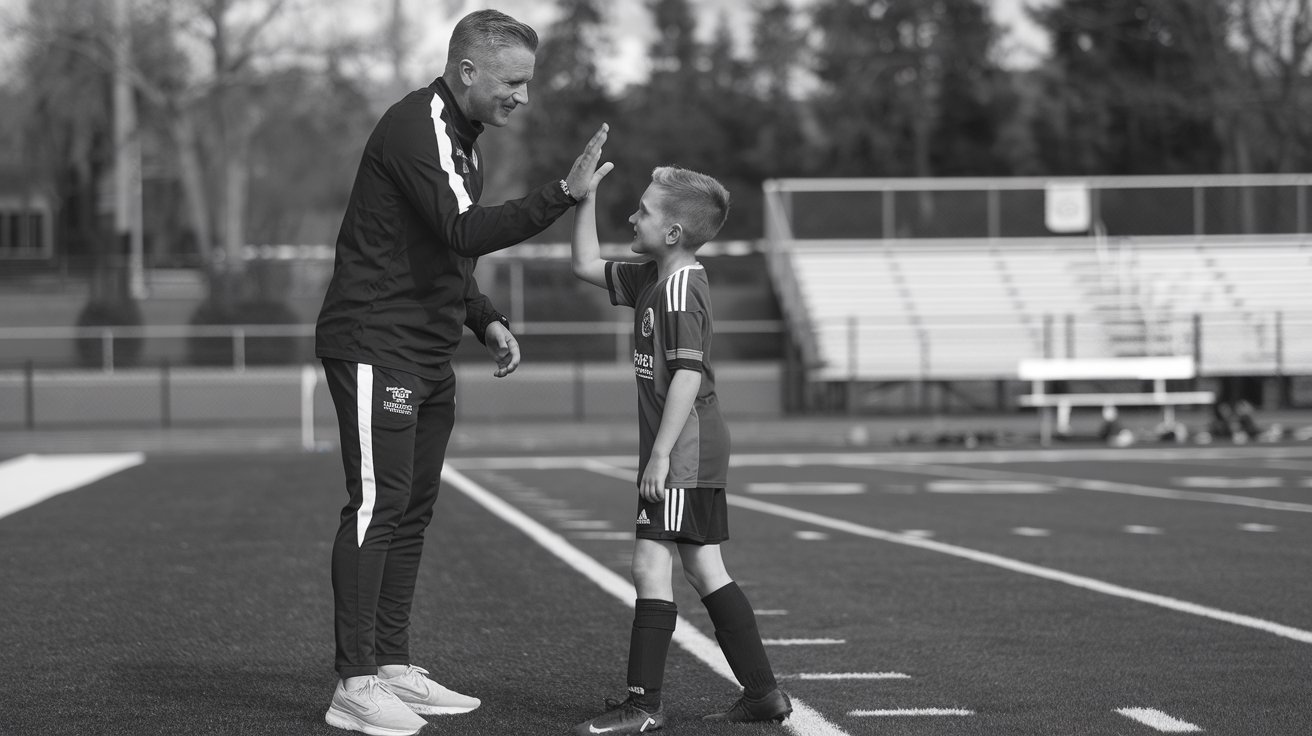
Developing confidence in young athletes requires age-appropriate approaches that emphasize effort over outcomes and foster intrinsic motivation. Research from the Positive Coaching Alliance shows that youth athletes (ages 8-14) build lasting confidence when coaches provide specific, actionable feedback rather than generic praise. Instead of saying “great job,” specify what was great: “Your footwork on that defensive slide was textbook—you stayed low and moved your feet rather than reaching.” This teaches young athletes to recognize and replicate specific successful behaviors, building competence awareness that translates to genuine confidence.
Parents and coaches must carefully manage the challenge-to-skill balance for developing athletes. The U.S. Youth Soccer Association reports that 70% of youth athletes quit sports by age 13, with low confidence cited as a primary factor. Preventing this requires creating success experiences through appropriate competition levels, realistic goal-setting, and protection from premature specialization pressure. Building kids confidence in sports succeeds when adults celebrate improvement rather than perfection, normalize mistakes as learning opportunities, and avoid comparative evaluations that pit young athletes against each other. The goal is developing self-referenced confidence—believing in personal growth trajectory rather than superiority over others.
The 5 C’s of Confidence in Sports
The 5 C’s of confidence framework provides a comprehensive model for understanding and developing sport-confidence: Competence, Commitment, Control, Composure, and Courage. Competence refers to actual skill level and the athlete’s accurate perception of their abilities. Athletes build competence through deliberate practice and honest self-assessment. Commitment represents dedication to improvement and willingness to invest effort in development. Research shows that athletes with strong commitment show 37% faster confidence recovery after setbacks compared to those with wavering dedication.
Control involves recognizing which factors you can influence (preparation, effort, attitude) versus external factors beyond your control (weather, officials, opponents). Athletes who focus energy on controllable elements maintain more stable confidence. Composure represents emotional regulation and the ability to remain calm under pressure—a skill developed through relaxation techniques and experience in pressure situations. Finally, Courage means willingness to take appropriate risks, try new strategies, and compete despite uncertainty. Together, these five elements create a robust confidence foundation. Assess yourself honestly on each component and develop targeted strategies to strengthen your weakest areas for comprehensive confidence development.
What to Say to an Athlete Struggling with Confidence
When addressing an athlete that struggles with lack of confidence, language precision matters enormously. Avoid dismissive phrases like “just be confident” or “don’t worry about it”—these invalidate the athlete’s experience and provide no actionable guidance. Instead, use specific, empowering language that redirects focus toward controllable factors. Effective phrases include: “Let’s review what you did well in practice this week,” “Remember the three techniques we worked on—focus on executing those,” and “Your preparation has been excellent; trust the work you’ve put in.” These statements ground confidence in tangible evidence rather than empty reassurance.
Additionally, help struggling athletes reframe internal dialogue from fixed to growth-oriented language. When an athlete says “I can’t do this,” teach them to add “yet” at the end: “I can’t do this yet.” This simple linguistic modification acknowledges current reality while implying future possibility, protecting confidence while maintaining motivation. Share stories of successful athletes who overcame similar struggles—vicarious experiences build confidence when athletes see others like themselves succeed. Most importantly, focus conversations on process goals (execution of technique, effort level, attitude) rather than outcome goals (winning, scoring). Process focus maintains confidence because it emphasizes controllable factors and creates success opportunities even in defeat.
Pre-Competition Routines for Peak Confidence
Establishing consistent pre-competition routines creates psychological anchors that trigger confident performance states. Elite athletes across all sports employ remarkably similar routine structures: physical warm-up (20-40 minutes), mental preparation (10-15 minutes), and final focus period (3-5 minutes). The physical component activates your body, increases core temperature, and rehearses sport-specific movements. The mental component typically includes visualization, self-talk, and arousal regulation through breathing. The final focus period involves narrowing attention to immediate task execution, often using a specific physical or mental cue that signals readiness.
Consistency matters more than specific routine content. Your brain learns to associate particular sequences with performance states, so repeating the same routine before competitions creates automatic confidence triggering. NBA research from 2026 shows that players who maintain consistent pre-game routines shoot 12% better on average than those with variable preparation approaches. Develop your routine during low-pressure practice situations first, then progressively implement it in increasingly competitive contexts. Include confidence-building elements like reviewing past successes, reciting personal affirmations, and physical power poses (standing tall with expansive posture for 2 minutes elevates testosterone and reduces cortisol by measurable amounts). Your pre-competition routine becomes your portable confidence system, available regardless of external circumstances.
Positive Self-Talk and Affirmations
Positive self-talk directly influences confidence by shaping the internal narrative that guides behavior and emotional response. Research distinguishes between instructional self-talk (“follow through on the release”) and motivational self-talk (“I’ve got this”). Both types enhance performance, but instructional self-talk proves more effective for technical skill execution, while motivational self-talk better supports confidence during adversity. Athletes who consciously manage internal dialogue show 31% better performance in high-pressure situations compared to those who allow automatic negative thoughts to dominate.
Developing effective self-talk requires first identifying current patterns, which are often unconsciously negative. Keep a thought journal for one week, recording internal dialogue during training and competition. Many athletes discover surprisingly harsh self-criticism they weren’t consciously aware of. Once identified, systematically replace negative patterns with constructive alternatives. Instead of “I always choke in big games,” reframe to “I’m developing clutch skills through experience.” Create personal affirmations that feel authentic—generic positive statements often ring hollow and fail to influence confidence. Effective affirmations are specific, present-tense, and evidence-based: “I have successfully executed this skill hundreds of times in practice; I trust my preparation.” Repeat key affirmations during visualization practice and pre-competition routines to strengthen their neurological impact.
Learning from Setbacks: Building Resilient Confidence
Resilient confidence distinguishes elite performers from recreational athletes—the ability to maintain self-belief despite setbacks, failures, and performance slumps. Research on Olympic athletes shows that medalists experience the same number of setbacks as non-medalists; the difference lies in their interpretation and response to adversity. Champions view setbacks as temporary, specific, and controllable (“I had a bad game today because I didn’t sleep well”), while struggling athletes make permanent, global, and uncontrollable attributions (“I’m just not good enough”). This explanatory style directly impacts confidence resilience and determines whether setbacks become learning opportunities or confidence destroyers.
Implement a systematic setback review process: Within 24 hours of a disappointing performance, complete a structured analysis identifying (1) three specific factors you can control and improve, (2) one thing you did well despite the outcome, and (3) one immediate action step for your next training session. This framework prevents rumination while extracting learning value from the experience. The 24-hour rule matters—waiting longer allows negative narratives to solidify, but analyzing too immediately heightens emotional distortion. Share your analysis with a coach or trusted teammate to gain perspective. Remember that confidence setbacks are normal and universal; every elite athlete experiences them. The difference lies not in avoiding confidence fluctuations but in developing systematic recovery strategies that restore self-belief quickly. Building this resilience transforms confidence from fragile glass into flexible steel—capable of bending under pressure without breaking.
Social Support Systems and Confidence
Social support represents one of the nine key confidence sources, yet athletes often underestimate its impact on self-belief. Surrounding yourself with positive, supportive people who believe in your potential creates an external confidence reservoir you can draw upon during internal doubt. Research from sports psychology programs across the United States shows that athletes with strong support networks maintain 43% more stable confidence levels throughout competitive seasons compared to those lacking supportive relationships. This includes coaches, teammates, family members, and friends who provide encouragement, constructive feedback, and perspective during challenging periods.
However, not all social interactions benefit confidence equally. Distinguish between supportive relationships (those who believe in your potential and provide constructive feedback) and toxic relationships (those who undermine, criticize unnecessarily, or create doubt). Toxic relationships erode confidence through constant negativity, comparison, or conditional approval based solely on performance outcomes. Audit your social circle: Does each relationship contribute positively to your confidence and development? If not, establish boundaries or distance yourself from confidence-draining interactions. Simultaneously, actively cultivate supportive relationships by joining training groups, seeking mentorship from experienced athletes, and communicating openly with coaches about your confidence development goals. Many athletes benefit from working with sports psychology professionals who provide objective support and evidence-based confidence-building strategies tailored to individual needs.
Related video about how to build confidence in sports
This video complements the article information with a practical visual demonstration.
Questions & Answers
What are the 5 C’s of confidence in sports?
The 5 C’s of confidence framework includes Competence (skill level and self-awareness), Commitment (dedication to improvement), Control (focusing on manageable factors), Composure (emotional regulation under pressure), and Courage (willingness to take appropriate risks). These elements work together to create robust sport-confidence. Athletes should assess themselves on each component and develop targeted strategies to strengthen weak areas. Research shows that athletes who consciously develop all five elements maintain significantly more stable confidence throughout competitive seasons compared to those who ignore this comprehensive approach.
What are the 9 sources of confidence in sport?
The nine sources of sport-confidence identified by research include: mastery experiences (past performance accomplishments), demonstration of ability (successfully showing skills), physical and mental preparation, physical self-presentation (feeling physically ready), social support (encouragement from others), vicarious experiences (watching similar others succeed), coach’s leadership, environmental comfort (familiar competition settings), and situational favorableness (perceived advantages). Elite athletes typically cultivate at least five sources simultaneously to maintain stable confidence. Mastery experiences represent the most powerful source, accounting for approximately 42% of total confidence according to 2026 research across Division I college sports programs in the United States.
How do you build confidence in young athletes?
Building confidence in young athletes requires emphasizing effort over outcomes, providing specific rather than generic feedback, and creating appropriate challenge levels that guarantee success experiences. Coaches should celebrate improvement rather than perfection, normalize mistakes as learning opportunities, and avoid comparative evaluations that pit young athletes against each other. Research shows that approximately 70% of youth athletes quit sports by age 13, with low confidence as a primary factor. Prevention involves developing self-referenced confidence where young athletes measure progress against their personal trajectory rather than comparisons with others. Parents and coaches should focus on controllable factors like effort, attitude, and technique execution rather than outcomes like winning or scoring.
What to say to an athlete that struggles with lack of confidence?
When addressing athletes struggling with confidence, use specific, empowering language that redirects focus toward controllable factors rather than dismissive phrases like “just be confident.” Effective statements include: “Let’s review what you did well this week,” “Remember the techniques we worked on—focus on executing those,” and “Your preparation has been excellent; trust the work.” Help athletes reframe internal dialogue from fixed to growth-oriented by adding “yet” to negative statements: “I can’t do this yet.” Share stories of successful athletes who overcame similar struggles, as vicarious experiences build confidence. Focus conversations on process goals like technique execution and effort rather than outcome goals like winning, since process focus maintains confidence by emphasizing controllable factors.
What is the relationship between self-confidence and performance in sports?
The relationship between self-confidence and performance creates a cyclical effect where success builds confidence, which then facilitates future success. Research from 2026 shows that athletes with high sport-confidence perform 34% better under pressure compared to those with lower confidence levels. Confidence directly influences decision-making speed, physical execution quality, and resilience during challenging moments. However, the relationship isn’t linear—excessive confidence can lead to insufficient preparation or poor decision-making. Optimal performance occurs when confidence aligns with actual competence levels. Athletes should develop what researchers call “realistic optimism”—believing in their ability to succeed while honestly assessing current skill levels and remaining committed to continuous improvement through deliberate practice.
How can breathing techniques improve confidence in sports?
Breathing techniques improve confidence by regulating physiological arousal and reducing stress hormones that undermine self-belief during competition. The physiological sigh—two quick inhales through the nose followed by a long exhale—reduces cortisol levels by 32% within 90 seconds according to 2026 neuroscience research. Box breathing (inhaling for 4 counts, holding for 4, exhaling for 4, holding for 4) activates the parasympathetic nervous system, creating calm alertness optimal for confident performance. Physical tension triggers the body’s stress response, narrowing attention and impairing motor control. Learning to regulate breathing provides athletes with immediate tools to restore confidence during pressure situations, and these techniques can be deployed discreetly without drawing attention during competition.
| Confidence Building Method | Implementation Strategy | Expected Benefit |
|---|---|---|
| Mastery Experiences | Document progress, maintain 60-70% success rate in training, keep performance journal | Most powerful confidence source (42% of total), creates lasting self-belief |
| Visualization Practice | 15-20 minutes daily, first-person perspective, all sensory details, always visualize success | Activates same neural pathways as physical practice, strengthens mental readiness |
| Breathing Techniques | Physiological sigh, box breathing, progressive muscle relaxation for 10 minutes daily | Reduces cortisol by 32%, improves performance consistency by 26% under pressure |
| Pre-Competition Routines | Consistent sequence: physical warm-up (20-40 min), mental prep (10-15 min), final focus (3-5 min) | 12% performance improvement, creates automatic confidence triggering |
| Positive Self-Talk | Replace negative patterns with constructive alternatives, use specific present-tense affirmations | 31% better performance in high-pressure situations when consciously managed |
| Social Support Systems | Cultivate supportive relationships, establish boundaries with toxic influences, seek mentorship | 43% more stable confidence levels throughout competitive seasons |