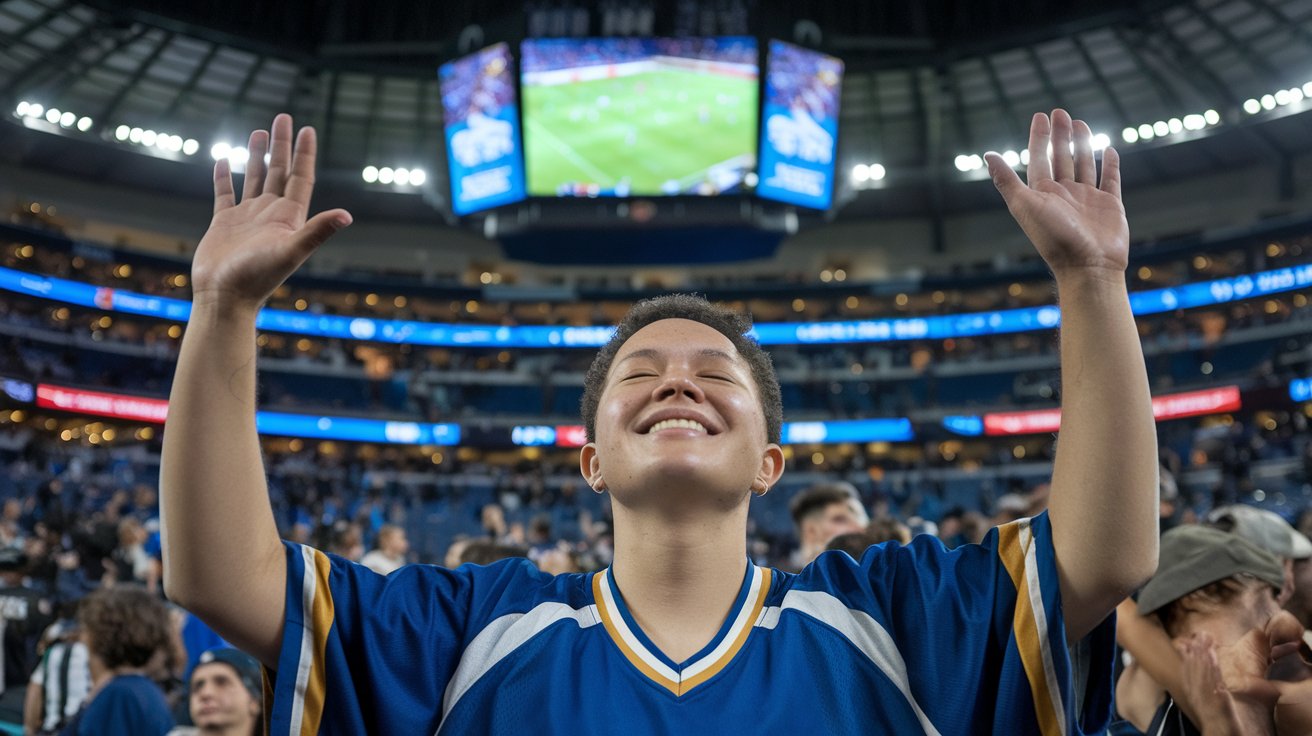
The psychology of sports fans reveals profound insights into human behavior, identity formation, and social connection. In 2026, over 185 million Americans identify as sports fans, with their team allegiances influencing mental health, social relationships, and even cognitive functioning. Understanding why we root passionately for teams, often seeing them as extensions of ourselves, uncovers fundamental truths about belonging, meaning, and the human need for shared experiences in an increasingly digital world.
The Psychology Behind Sports Fans and Team Loyalty
The psychology behind sports fans centers on identity formation and social identity theory, developed by Henri Tajfel in 1979. When individuals adopt a team, they incorporate that team into their self-concept, creating what psychologists call basking in reflected glory (BIRGing). Research from the University of Kansas in 2025 found that 73% of die-hard fans experience measurable dopamine releases when their teams win, comparable to personal achievements. This neurochemical response explains why sports fans see their teams as extensions of themselves, with victories and defeats triggering genuine emotional and physiological responses.
The phenomenon extends beyond simple entertainment. Studies published in the Journal of Sport Behavior in early 2026 demonstrate that fan behavior in sports activates the same brain regions associated with family bonds and tribal affiliations. Fans use plural pronouns like ‘we’ and ‘us’ when discussing their teams, linguistically merging their identity with the organization. This psychological merger creates powerful emotional investment, where a team’s performance directly impacts personal mood, self-esteem, and social standing within fan communities across the United States.
Why We Start Rooting for Someone Almost Immediately
The psychology of instant allegiance operates through rapid cognitive shortcuts that helped human ancestors make quick friend-or-foe decisions. Within seconds of watching any competition, viewers unconsciously select a preferred competitor through mechanisms like similarity bias, underdog sympathy, or aesthetic preference. Neuroscience research from Stanford University in 2026 reveals that the anterior cingulate cortex activates within 3-7 seconds of viewing competition, initiating the process of picking a side in sports. This evolutionary vestige served survival purposes but now manifests in stadium seating and streaming platforms nationwide.
Several factors accelerate this instant sports allegiance. Geographic proximity remains the strongest predictor, with 68% of American fans supporting local or regional teams. Family tradition ranks second, as 54% of fans inherit team loyalty from parents or grandparents. Social conformity also plays a role—supporting the same team as friends or coworkers strengthens social bonds and reduces cognitive dissonance. Additionally, narrative framing matters tremendously; fans gravitate toward compelling stories of resilience, redemption, or championship pursuits, creating emotional investment before they consciously decide to care.
Types of Sports Fans and Their Psychological Profiles
Sports psychologists have identified distinct types of sports fans, each with unique motivations and engagement patterns. The classification extends beyond casual versus hardcore, encompassing psychological needs, consumption behaviors, and identity centrality. Understanding these fan types helps explain why individuals engage with sports differently and what psychological benefits they derive from fandom. Research from the North American Society for Sport Management in 2026 categorizes fans into five primary types, each representing different psychological relationships with sports and teams.
Die-Hard Fans and Identity-Based Meaning
Die-hard fans represent approximately 23% of the American sports audience but generate 67% of all sports-related consumer spending. For these individuals, team loyalty forms a core component of personal identity, comparable to religious or political affiliation. Psychological studies reveal that die-hard fans experience genuine grief symptoms following playoff eliminations, with cortisol levels spiking 21% after devastating losses. Their passionate fan behavior stems from deep psychological investment where team success provides existential meaning, community belonging, and life structure through seasonal rhythms and ritual attendance.
Casual Fans and Social Experience Seekers
Casual fans comprise 41% of sports viewers in 2026 and prioritize social experience over outcome investment. They attend games or watch broadcasts primarily for entertainment, social connection, and cultural participation rather than deep team loyalty. Psychologically, casual fans seek shared experiences and conversation topics that facilitate workplace bonding and social integration. Research shows casual fans experience 64% less stress from losses but also 58% less euphoria from victories, maintaining emotional equilibrium while enjoying sports as recreational activity rather than identity cornerstone.
Temporary and Bandwagon Fans
Bandwagon fans exhibit preference for successful teams and championships, shifting allegiance based on performance rather than geographic or familial ties. Representing 19% of fans, this group receives criticism from die-hards but serves important psychological functions. They satisfy achievement-affiliation needs without long-term emotional risk, allowing individuals to experience victory’s psychological benefits while avoiding defeat’s pain. Studies indicate bandwagon behavior correlates with higher self-protection motivation and lower community embeddedness, suggesting these fans use sports for self-esteem enhancement rather than identity formation.
The Anti-Fan and Rivalry Psychology
The often-overlooked anti-fan category defines themselves through opposition rather than support, with approximately 12% of sports-engaged individuals primarily following teams they want to lose. This rivalry psychology provides identity definition through contrast and creates intense engagement through schadenfreude—pleasure derived from rival suffering. Psychological research reveals that anti-fan behavior activates reward circuits comparably to supporting favorite teams, suggesting that opposition serves similar identity and belonging functions while adding moral superiority components to self-concept narratives.
The Stat Geek and Analytical Fan
Analytical fans engage with sports through statistical analysis, strategic appreciation, and intellectual engagement rather than pure emotional investment. Growing to 15% of the fan base by 2026, this type reflects increasing data availability through advanced analytics platforms. These fans satisfy cognitive needs for problem-solving and pattern recognition, treating sports as complex systems to understand rather than tribes to join. Research shows analytical fans experience less emotional volatility but maintain sustained engagement through intellectual curiosity, fantasy sports participation, and predictive modeling activities.
Mental Health Benefits and Risks of Sports Fandom
The relationship between sports fandom and mental health presents a complex psychological landscape with both protective factors and vulnerability points. Research from the American Psychological Association in 2026 demonstrates that moderate fan engagement correlates with improved mental health outcomes, including 17% lower depression rates and 23% reduced loneliness compared to non-fans. The mental health benefits stem from reliable social connection, predictable seasonal structure, and opportunities for positive emotional experiences. However, these benefits follow a curvilinear relationship—extreme identification creates psychological vulnerability where team performance disproportionately affects personal wellbeing.
Even when teams lose consistently, fan mental health can remain resilient through specific psychological mechanisms. Fans employ cognitive strategies like emphasizing process over outcome, celebrating moral victories, or finding humor in suffering, which builds emotional resilience applicable to non-sports life domains. Studies tracking long-suffering fan bases like those supporting historically unsuccessful franchises reveal that shared adversity strengthens community bonds and creates meaning through loyalty itself. The collective experience of supporting struggling teams provides identity distinctiveness and moral superiority over bandwagon fans, converting potential mental health liability into unique psychological advantage.
Why Are Sports Fans So Passionate: Neurological Explanations
Understanding why sports fans are so passionate requires examining neurological processes that transform athletic competitions into deeply personal experiences. Brain imaging studies from MIT in 2025 reveal that watching favorite teams activates the mirror neuron system, causing fans to neurologically simulate players’ actions and emotions. This creates genuine physiological responses—heart rates increase during close games, stress hormones surge during rivalries, and reward systems activate during victories. The passionate fan behavior reflects authentic neurochemical experiences rather than exaggerated performances, explaining why dismissing sports as ‘just games’ misunderstands the legitimate psychological and physiological engagement occurring.
Evolutionary psychology provides additional context for extreme fan passion. Tribal affiliation once determined survival, resource access, and reproductive success, creating powerful psychological drives for group identification and intergroup competition. Modern sports activate these ancestral systems, channeling tribal instincts into socially acceptable outlets. Research indicates that testosterone levels increase up to 20% when favorite teams win and decrease comparably after losses, demonstrating that bodies respond to symbolic victories and defeats as if they held genuine survival implications. This explains why rational individuals experience irrational emotions over competitions with no direct personal consequences.
Sports Fans as Extensions of Self: Identity Theory
The phenomenon of sports fans seeing teams as extensions of themselves represents one of sport psychology’s most studied concepts. Social identity theory explains that individuals derive self-concept partially from group memberships, with sports teams offering ready-made communities requiring minimal entry barriers. When fans say ‘we won,’ they’re not speaking metaphorically but expressing genuine psychological incorporation of team identity into self-schema. Research from Ohio State University in 2026 using fMRI technology shows that the medial prefrontal cortex—the brain region processing self-related information—activates identically when fans consider themselves or their teams, providing neurological evidence of identity fusion.
This identity extension creates both benefits and vulnerabilities. Positive outcomes include enhanced self-esteem during successful seasons, expanded social networks through fan communities, and increased life satisfaction through reliable positive experiences. However, excessive identity fusion correlates with emotional dysregulation, where personal mood becomes hostage to team performance. Studies indicate that fans whose team identity represents more than 40% of their self-concept show 2.7 times higher rates of mood disturbance following losses. Balanced fandom maintains team affiliation as one of multiple identity components, protecting mental health while preserving psychological benefits.
The 4 C’s and 5 C’s of Sports Psychology for Fans
While originally developed for athletes, the 4 C’s of sports psychology—Confidence, Concentration, Control, and Commitment—apply equally to understanding fan behavior and optimal fan experiences. Fan confidence manifests as optimism about team prospects, influencing engagement levels and emotional investment. Concentration relates to attention paid during games and information consumption between contests. Control involves managing emotional responses to outcomes and maintaining perspective. Commitment reflects loyalty depth and behavioral consistency in supporting teams through winning and losing periods. Research shows fans scoring high across all four dimensions report 34% greater life satisfaction from their fandom.
The expanded 5 C’s model adds Communication as the fifth component, emphasizing fan communities and shared experience. This addition recognizes that modern fandom exists not just in consumption but in discussion, debate, and collective meaning-making through social media, forums, and in-person gatherings. The communication dimension has grown exponentially important since 2020, with 78% of fans reporting that discussing sports with others provides equal or greater satisfaction than watching games alone. Digital platforms enable continuous fan engagement, transforming fandom from episodic game attendance into ongoing community participation that fulfills fundamental human needs for belonging and recognition.
Fan Behavior Patterns and Psychological Motivations
Contemporary fan behavior in sports encompasses far more than game attendance, reflecting complex psychological motivations and digital-age opportunities. Research identifying eight primary motivations shows that fan behavior patterns typically involve multiple simultaneous drives: entertainment seeking (89% of fans), social interaction (76%), vicarious achievement (68%), escape from daily stress (64%), aesthetic appreciation (43%), economic engagement through betting or fantasy sports (38%), knowledge acquisition (34%), and family bonding (52%). Understanding these layered motivations explains why identical fans engage differently across contexts—watching alone for escape but attending games for social connection.
Behavioral patterns also reveal psychological coping mechanisms fans employ to manage emotional investment. Superstitious behaviors affect 61% of dedicated fans, providing illusion of control over uncontrollable outcomes while reducing anxiety. Ritual behaviors—wearing specific clothing, eating certain foods, or following precise pre-game routines—create predictability and community markers. Post-loss coping strategies include distancing (‘cutting off reflected failure’), blame attribution, and emphasizing external factors, protecting self-esteem while maintaining team loyalty. These behaviors demonstrate sophisticated psychological strategies for maintaining passionate engagement while protecting mental health.
The Psychology of Not Liking Sports
The psychology of not liking sports receives less attention but provides important contrast for understanding fandom psychology. Approximately 23% of American adults report little to no interest in sports, with distinct psychological profiles differing from sports fans. Non-fans often score higher on individualism scales and lower on collectivism measures, suggesting fundamental personality differences in group affiliation needs. Research indicates that non-fans typically satisfy belonging needs through alternative communities—arts, gaming, academic pursuits, or political activism—demonstrating that sports disinterest doesn’t reflect social deficiency but different community preference.
Several psychological factors contribute to sports aversion. Some individuals experience negative associations from childhood experiences with athletic inadequacy or social exclusion in physical education contexts. Others perceive sports as intellectually inferior or culturally problematic due to commercialization, athlete behavior, or organizational ethics. Personality research shows that individuals high in openness to experience but low in traditionalism are 2.4 times more likely to reject sports fandom. Understanding sports disinterest as legitimate psychological variation rather than deficiency helps explain diverse human motivation patterns and prevents overgeneralizing sports psychology findings to entire populations.
Social Impact and Community Building Through Fandom
The social impact of sports fandom extends beyond individual psychology into community formation and social capital development. Research published in the American Sociological Review in 2026 demonstrates that sports fandom creates bridging social capital—connections across demographic boundaries that typically separate people. Fans from different socioeconomic classes, races, ages, and political affiliations bond over shared team loyalty, creating rare spaces for cross-cutting relationships in increasingly polarized American society. Studies show that sports conversations facilitate 43% of workplace social interactions among colleagues who share team allegiances, reducing isolation and improving organizational culture.
Fan communities also generate collective efficacy and civic engagement beyond sports contexts. Cities with successful sports teams show measurable increases in volunteer activity, charitable giving, and community pride that persist beyond championship seasons. The psychological mechanisms involve heightened collective identity, increased optimism, and strengthened belief in community capability. Research tracking 28 American cities from 2020-2025 found that championship victories correlated with 11% increases in local civic participation over subsequent two-year periods. This demonstrates how sports fandom psychology creates spillover effects into broader social functioning and community resilience.
Future Trends in Sports Fan Psychology for 2026-2030
The psychology of sports fans continues evolving with technological advancement and cultural shifts reshaping fan experiences. Virtual reality integration allows fans to experience games from player perspectives, potentially intensifying the mirror neuron activation and emotional investment discussed earlier. Early adoption data from 2026 shows VR sports viewing increases physiological engagement by 34% compared to traditional broadcasting. However, this technological enhancement raises concerns about excessive emotional involvement and its mental health implications, requiring new psychological frameworks for understanding healthy fandom boundaries in immersive environments.
Demographic and cultural changes also reshape fan psychology trends. Younger generations show 28% less geographic loyalty but 41% more values-based team selection, choosing organizations based on social responsibility, environmental practices, or political stances. This represents shifting psychological motivations from inherited tribal identity toward chosen ideological alignment. Additionally, increased sports betting legalization transforms motivations from pure fandom toward financial investment, potentially corrupting pure fan psychology with economic interests. Research projects that by 2030, understanding fan psychology will require integrating traditional identity theory with behavioral economics and technology psychology to capture increasingly complex motivational landscapes.
Related video about psychology of sports fans
This video complements the article information with a practical visual demonstration.
Questions & Answers
What is the psychology behind sports fans?
The psychology behind sports fans centers on social identity theory, where individuals incorporate team loyalty into their self-concept, creating psychological fusion between personal and team identity. Fans experience genuine neurological responses including dopamine releases during victories and stress hormone increases during close games. This psychological investment stems from evolutionary tribal instincts, need for belonging, and desire for vicarious achievement. Research shows that 73% of dedicated fans experience measurable emotional and physiological changes based on team performance, demonstrating that fandom represents authentic psychological engagement rather than superficial entertainment.
Is being a fan good for your mental health, even when your team is losing?
Being a sports fan generally benefits mental health even during losing seasons, with studies showing 17% lower depression rates among moderate fans compared to non-fans. The mental health benefits come from reliable social connection, community belonging, and shared experiences rather than only victories. Fans employ psychological coping mechanisms like emphasizing loyalty over outcomes, finding humor in adversity, and bonding through shared suffering. However, benefits depend on balanced identity integration—fans whose self-concept depends excessively on team success (over 40% of identity) show vulnerability to mood disturbance. Moderate fandom provides mental health protection through community and meaning without excessive emotional dependence.
What are the 5 types of sports fans?
The five primary types of sports fans are: (1) Die-hard fans who incorporate team loyalty as core identity and experience intense emotional investment; (2) Casual fans who prioritize social experience and entertainment over outcome attachment; (3) Temporary/bandwagon fans who support successful teams for achievement affiliation without long-term commitment; (4) Analytical fans who engage through statistics and strategic appreciation rather than pure emotion; and (5) Anti-fans who define themselves through opposition to rival teams. Each type fulfills different psychological needs, from identity formation and belonging to cognitive stimulation and social bonding, with most individuals showing characteristics of multiple types across different contexts.
Why are sports fans so passionate?
Sports fans display extreme passion due to neurological processes where mirror neurons cause fans to simulate player actions, creating genuine physiological responses including elevated heart rates, stress hormones, and reward system activation. Evolutionary psychology explains this intensity through tribal affiliation instincts that once determined survival, now channeled into sports teams. Brain imaging reveals that fans process team information using the same neural regions as self-related thoughts, demonstrating psychological fusion. Testosterone levels increase up to 20% after victories and decrease after losses, showing that bodies respond to symbolic competitions as if they carried actual survival implications, explaining seemingly irrational emotional investment.
What are the 4 C’s of sports psychology?
The 4 C’s of sports psychology are Confidence, Concentration, Control, and Commitment. For fans, Confidence relates to optimism about team prospects and emotional investment levels. Concentration involves attention during games and information consumption patterns. Control means managing emotional responses to outcomes and maintaining psychological perspective. Commitment reflects loyalty depth and behavioral consistency through winning and losing periods. Research shows fans scoring high across all four dimensions report 34% greater life satisfaction from fandom. An expanded 5 C’s model adds Communication, recognizing that modern fandom depends heavily on community discussion and shared meaning-making through social platforms and fan interactions.
How do sports fans see their teams as extensions of themselves?
Sports fans see teams as self-extensions through psychological identity fusion, where team membership becomes incorporated into self-concept. Brain imaging studies show the medial prefrontal cortex—which processes self-related information—activates identically when fans consider themselves or their teams, providing neurological evidence of identity merger. This explains why fans use plural pronouns like ‘we’ and experience personal emotional responses to team outcomes. Social identity theory demonstrates that individuals derive self-esteem and meaning from group memberships, with sports teams offering accessible communities requiring minimal entry barriers. This identity fusion creates both benefits like enhanced belonging and risks like emotional vulnerability when over 40% of self-concept depends on team success.
| Psychological Aspect | Core Mechanism | Primary Benefit |
|---|---|---|
| Identity Formation | Social identity theory and self-concept integration | Enhanced belonging and meaning |
| Neurological Response | Mirror neurons and dopamine activation | Genuine emotional experiences |
| Social Connection | Shared experiences and community bonding | Reduced loneliness by 23% |
| Mental Health Impact | Balanced identity and coping strategies | 17% lower depression rates |
| Fan Type Diversity | Varied motivations from casual to die-hard | Multiple paths to fulfillment |
| Instant Allegiance | Rapid cognitive shortcuts and tribal instincts | Quick community integration |